





Digital transformation is essential for businesses aiming for competitiveness and sustainability. Procurement, traditionally seen as a cost center, is now a major strategic lever for value creation and innovation. Digitalizing procurement is no longer optional; it’s crucial for optimizing processes, cutting costs, and achieving sustainable operational excellence.
It redefines how companies interact with suppliers, manage spend, and make critical decisions. By integrating advanced technologies, procurement teams can move beyond repetitive tasks. They can focus on high-value initiatives, transforming their role into a key driver of growth and organizational resilience. This article explores how digitalization elevates procurement performance, offering concrete strategies and innovative tools for modern procurement management in the digital age.
⏱️ Key Takeaways in 2 Minutes
- Digitalizing procurement significantly cuts labor costs by up to 21%. It also reduces transaction errors by two to three times through smart automation.
- Procurement and finance teams gain up to 40% more time. This frees them from repetitive tasks to focus on strategic, high-value initiatives.
- It provides 360° visibility into supplier flows and spend. This enables informed decision-making and real-time budget control.
Understanding Procurement Digitalization
Procurement digitalization, often called e-procurement, refers to digital solutions that streamline and optimize a company’s purchasing processes. This deep transformation leverages technology to modernize and smooth B2B commercial transactions.
E-procurement is defined as electronic or online procurement, a system exclusively for the Business-to-Business sector. It differs from consumer online shopping. Its key feature is a dedicated software that centralizes a company’s procurement management, simplifying and automating the entire purchasing process.
This digitalization of commercial transactions goes beyond simple document scanning. It involves a complete overhaul of workflows, from purchase requisition to invoicing and payment, leveraging the power of the internet. The goal is to move past traditional, often manual and time-consuming methods. This boosts efficiency, cuts costs, and minimizes errors.
This revolution began in the 1980s with Electronic Data Interchange (EDI). EDI laid the groundwork for dematerialization, enabling fast exchange of purchase orders and invoices between suppliers and companies. It gradually replaced phone calls and traditional emails. In the 1990s, as management software became widespread, electronic purchasing platforms became essential. They offered easy access to catalogs, purchase orders, invoices, and payment methods.
It’s crucial to distinguish e-procurement from e-sourcing. E-procurement handles the actual purchasing act through an online supplier platform. E-sourcing, however, covers all practices and tools for selecting and finding suppliers. E-sourcing helps companies identify, evaluate, and qualify the best potential partners. It considers various criteria related to the company’s procurement policy and market knowledge. In short, e-procurement follows a successful e-sourcing process, enabling purchases with strategically selected suppliers.
Strategic Levers of Procurement Digitalization
Digitalization goes beyond modernizing tools. It strategically overhauls the procurement function, offering powerful levers to boost efficiency, cut costs, improve visibility, and strengthen compliance. These transformations directly impact overall business performance.
Boost Efficiency and Productivity
Many companies still struggle with ‘paper and spreadsheet’ management. This outdated approach, often relying on Excel, severely limits collaboration, creates errors (data loss, duplicates), and wastes valuable time. Remote work, in particular, has highlighted the shortcomings of these manual processes. Digitalization offers a structural solution by automating repetitive, low-value tasks.
Procurement teams can free themselves from manual and administrative tasks, like data collection and reprocessing. Automation boosts speed and efficiency, from product selection to invoicing, including purchase order and payment management. The valuable time saved can then be reallocated to more strategic, beneficial company initiatives.
Digitalization also standardizes workflows and procedures. By implementing systems that unify processes, companies ensure consistent, efficient task execution. Transactions route through appropriate channels, and approvals ensure orders go to the right suppliers. This happens under current contractual terms and at the correct price. This harmonization significantly reduces errors and non-compliance risks.
By freeing employees from time-consuming operational tasks, digitalization frees up time for high-impact activities. Procurement teams can then focus on strategic thinking, developing innovative procurement policies, organizing in-depth competitive bidding, managing strategic contracts, and strengthening supplier relationships. This strategic reorientation is vital for driving innovation and creating lasting value.
Cost Reduction and Budget Control
Procurement digitalization directly reduces costs. It significantly lowers administrative and operational expenses by eliminating paper processes and costly human intervention. Automating operations reduces labor for traditional tasks, leading to lower prices and faster product access. These savings become even more significant with bulk purchases.
A major benefit is limiting ‘maverick buying’ — purchases made outside contractual frameworks or established procedures. Approved electronic catalogs and digital approval workflows ensure all spend undergoes rigorous control. This prevents circumvention that undermines price negotiations and increases unplanned expenses.
Digitalization also excels at identifying and reducing hidden transaction costs. Digital platforms provide a global view and summarized data on dashboards, quickly revealing these often-unsuspected costs. For instance, processing an invoice under €100 can sometimes cost more in administrative fees than the purchase value itself. By automating invoice processing and optimizing workflows, digitalization turns these losses into efficiency gains.
Finally, improved visibility and centralized supplier data strengthen a company’s negotiation power. Businesses can analyze information more precisely, evaluating each supplier’s performance and risks. This makes it easier to secure better pricing and payment terms. A digitalized supplier panel becomes an asset for optimizing procurement and reducing spend.
Enhanced Visibility and Decision Support
Digitalization provides a comprehensive 360° view of all supplier flows. By centralizing spend management data, companies get real-time insights into commitments, contracts, and partner performance. This holistic view is essential for anticipating risks, ensuring compliance, and effectively monitoring suppliers.
Centralized data enables in-depth spend analysis. E-procurement software identifies which departments order the most, if budgets are met, and if supplier contracts are properly utilized. This structured information is crucial for managing spend and understanding where company funds are truly allocated. This leads to better cost and risk control.
The ability to track Key Performance Indicators (KPIs) in real time is a significant advantage. Interactive dashboards provide a clear, up-to-date view of delivery times, contract compliance, stock levels, and spend by category. This end-to-end transparency across all supplier cycle transactions enables more proactive and responsive management.
All this data and analysis greatly facilitate informed decision-making. With reliable, up-to-date information, general management and procurement managers can better balance business needs with committed spend. They can optimize returns, manage the supplier portfolio, and align procurement strategy with profitability and operational efficiency goals.
Security, Compliance, and Risk Management
Smart automation of procurement processes drastically reduces manual errors. These errors can be costly and complex to fix in a paper-based environment. Dematerialization and workflow integration ensure greater data reliability and seamless transaction execution.
Digitalization is a major asset for ensuring compliance with current contracts and regulations. E-procurement systems ensure all orders go to the right suppliers, adhering to contractual terms and negotiated prices. They facilitate compliance checks and reduce the risk of off-contract purchases, which can lead to significant financial losses. Furthermore, integrated Contract Lifecycle Management (CLM) tools can drive significant improvements in legal compliance and efficiency.
Supplier risk management is strengthened by increased visibility and risk assessment tools. Digitalization helps identify key suppliers, evaluate their risk profiles (financial, operational, reputational), and continuously monitor changes. An integrated system can alert to emerging risks and help implement proactive action plans, ensuring supply chain security.
Finally, the transparency inherent in digital solutions ensures full action traceability. Every step of the procurement process, from initial request to goods receipt, is recorded and audited. You can see who made the request, who approved it, the order date, and receipt history. This traceability is crucial for accountability, data integrity, and swift dispute resolution.
Improved Supplier Relationships
Procurement digitalization transforms how companies select and evaluate suppliers. Advanced tools enable up-to-date risk profiling, qualifying, and segmenting suppliers by category, location, and business unit. This rigorous selection ensures chosen partners are reliable and aligned with company objectives.
Beyond simple transactions, digitalization fosters strong, strategic supplier relationships. By automating administrative tasks, procurement teams gain time to interact more deeply with strategic partners. They can negotiate better contractual terms and explore collaborative innovation opportunities. These robust professional relationships are essential for supply chain resilience.
E-procurement platforms also offer access to an extended and competitive supplier panel. By centralizing information and offers from multiple suppliers, companies can easily compare prices, services, and terms. This ensures they get the best proposals. This not only cuts costs but also diversifies supply sources and reduces reliance on a single partner.
Essential Procurement Digitalization Tools
To realize the benefits of digitalization, companies rely on a range of tools and software solutions. These technologies automate, centralize, and optimize every facet of the purchasing process, from initial request to final payment.
Integrated E-Procurement Software
E-procurement software is central to procurement digitalization strategy. Its core role is to orchestrate and manage the entire supply cycle, transforming physical and manual operations into seamless electronic processes. These digital platforms are the primary tool for centralizing procurement management and simplifying all purchasing steps.
These solutions specifically automate the Procure-to-Pay (P2P) process. This covers the entire purchasing cycle, from needs analysis to creating purchase requisitions and purchase orders, through to final supplier invoice payment. P2P is a complex process, and its automation offers significant benefits for businesses.
Effective e-procurement software integrates internal purchase requisition management, purchase order issuance and approval, and electronic invoicing. Users can browse product catalogs, submit requests, and track order progress. Invoice dematerialization ensures fast processing and significantly reduces manual errors.
Accessibility is a key feature of modern software. These cloud-based solutions are often accessible from any device (computer, tablet, smartphone) at any time. This flexibility allows teams to manage procurement from anywhere, fostering mobility and internal collaboration. User experience is also optimized for intuitive adoption.
Supplier Relationship Management (SRM)
Supplier Relationship Management (SRM) is a crucial component of digitalization. SRM software centralizes all supplier-related data, providing a unified, comprehensive view. It aggregates key information like contacts, contracts, order history, performance, and risks associated with each business partner.
These tools are crucial for evaluating supplier performance and compliance. They enable procurement teams to analyze purchasing cycles, identify strengths and weaknesses, and ensure suppliers meet quality standards, deadlines, and regulatory requirements. Effective SRM is vital for reducing hidden costs and avoiding brand reputation risks.
SRM optimizes supplier lifecycle management, from initial selection to continuous evaluation and contract renegotiation. This includes qualification, segmentation, onboarding, and risk monitoring. This builds strong, strategic, long-term partnerships.
For maximum efficiency, SRM solutions must integrate seamlessly with other enterprise IT systems. These include ERP (Enterprise Resource Planning) for inventory and financial management, and CRM (Customer Relationship Management) for a unified view of interactions. This integration ensures data consistency, reduces manual entries, and facilitates strategic decision-making by offering a global view of operations.
Punch-Out: Simplified Purchasing Experience
Punch-Out is an advanced e-procurement feature that significantly simplifies the purchasing experience for internal users. It’s an online product catalog provided by a supplier, directly integrated into the client company’s e-procurement platform. The buyer accesses the supplier’s catalog without ever leaving their own system.
Punch-Out works intuitively: the buyer logs into their e-procurement platform, searches for the desired supplier’s catalog, and ‘punches out’ to it. They can then browse items, select products, and add them to their cart, just like on a regular e-commerce site. Once the selection is complete, the cart is ‘punched back’ to the buyer’s e-procurement software for processing, approval, and ordering.
This technology offers significant time savings and error reduction. It eliminates the need for buyers to navigate multiple websites, copy-paste information, or manually re-enter order data. Process automation minimizes data entry errors, ensuring greater accuracy and efficiency.
A key advantage of Punch-Out is catalog customization. Suppliers can tailor their offerings to precisely match each client’s needs and negotiated contracts. This means buyers only access relevant products at agreed-upon prices, which simplifies searching and further speeds up the purchasing process.
Strategic Procurement Tools (RFX, CLM)
For more complex and strategic procurement, digitalization provides specific tools that structure supplier relationships and secure contractual commitments. Among these, RFX (Request For X) tools are essential.
They manage Requests for Information (RFI), used by buyers to collect and evaluate initial, high-level information on potential suppliers. This is the first step to qualify a new partner.
Next come Requests for Proposal (RFP). Suppliers deemed qualified during the RFI stage may be invited to submit a detailed proposal. The buyer outlines their needs comprehensively, asking suppliers to describe how they would meet them, often with complex or innovative solutions.
Requests for Quotation (RFQ) typically form the final stage of a sourcing process. These are quote requests where the buyer negotiates the final terms of an agreement, primarily focusing on prices. Reverse auctions, a specific type of RFQ, boost competition by inviting pre-qualified bidders to compete for contract elements. This can cut costs by nearly 35% and resolve negotiations in minutes.
Concurrently, Contract Lifecycle Management (CLM) is a technology tool that manages an organization’s entire contractual process. This spans from design to execution, performance, renewal, or expiration. A well-integrated CLM can drive significant improvements in cost reduction, compliance, and legal efficiency.
Artificial Intelligence and Workflow Automation
Integrating Artificial Intelligence (AI) and Machine Learning (ML) into procurement solutions marks a new era for workflow automation. These technologies move beyond simple automation, enabling smarter, more adaptive processes.
AI and ML can forecast procurement risks and opportunities. By analyzing vast amounts of historical and real-time data, these systems anticipate price fluctuations, supply disruptions, consumption trends, and other critical factors. This empowers procurement teams to make proactive decisions, optimize inventory, and secure supplies.
Workflow automation, coupled with AI, optimizes internal purchase requisition processing and alerts. Systems can prioritize requests, automate routine approvals, and generate smart alerts for non-compliance or budget overruns. This streamlines inter-departmental communication and ensures timely action, reducing bottlenecks and increasing overall responsiveness.
These technologies boost performance by significantly reducing, or even eliminating, manual and redundant workflows. They accelerate supplier onboarding, cut time-to-market, and allow teams to focus on higher-value tasks like innovation and strategic development.
Deploying a Successful Procurement Digitalization Strategy
Implementing a procurement digitalization strategy goes beyond just acquiring software. It requires a structured approach and meticulous planning to ensure success and maximize ROI.
The first step is to clearly define the company’s internal needs and objectives. It’s crucial to involve all relevant stakeholders to identify current pain points, processes to optimize, and expected digitalization outcomes. This diagnostic phase must be collaborative and shared to ensure future buy-in.
Next, evaluate existing systems. This involves analyzing current IT systems, manual processes (often spreadsheet-based like Excel), and applications in use. Understanding the current architecture helps identify gaps and prepares for integrating new solutions without disrupting operations. Older systems, like Microsoft Access, while inexpensive, often carry error risks and no longer meet modern requirements.
Choosing the right solution is a strategic decision. It’s not about digitizing everything, but selecting the tool that best matches desired features, budget, and usability. Compare available offerings, focusing on service quality, ease of use, and the solution’s ability to meet specific business needs. An overly complex or oversized solution can be counterproductive.
Anticipating user adoption and training is a key success factor. Even the best software is useless if not adopted. It’s imperative to implement an internal training plan to upskill teams and ensure all employees affected by the new organization are engaged and informed. Intuitive onboarding is essential to maximize adoption rates.
Calculating Return on Investment (ROI) is an essential step. It justifies the investment and measures the concrete benefits of digitalization, such as reduced labor costs, fewer transaction errors, or time savings. Studies show a significant ROI, often doubled for companies that embrace this path.
Finally, a step-by-step action plan is necessary to deploy the strategy. It must include clear steps, defined responsibilities, and regular monitoring. A structured method, like those presented in certain webinars, helps gain internal buy-in and ensures successful, progressive implementation.
Strategic Procurement Digitalization Deployment Process
1. Define Needs & Objectives
Identify pain points and expectations.
2. Evaluate Existing Systems
Analyze current systems and processes.
3. Choose the Right Solution
Features, pricing, usability, scalability.
4. User Adoption & Training
Change management and support.
5. Calculate Return on Investment (ROI)
Measure economic and operational benefits.
6. Action Plan & Phased Rollout
Step-by-step implementation and continuous optimization.
Weproc: E-Procurement for SMBs and Mid-Market Companies
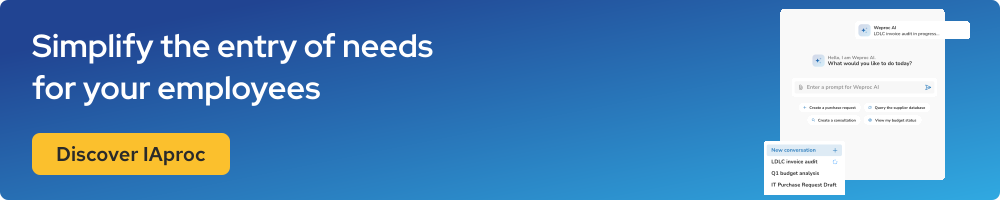
Facing increasing market complexity and the imperative for efficiency, more SMBs and mid-market companies are turning to e-procurement solutions. Weproc is a key player in this transformation, offering a 100% French SaaS solution specifically designed to meet their needs.
Weproc is a comprehensive platform that digitalizes, manages, and optimizes all procurement processes. It centralizes all purchasing activities into a single tool, simplifying the management of requisitions, suppliers, orders, and invoices. This integrated approach is essential for companies seeking to improve operational performance without investing in heavy, costly systems.
One of Weproc’s major strengths is its ergonomics and ease of use. Recognizing that user adoption is crucial, Weproc’s developers focused on making the solution intuitive and user-friendly. This ensures maximum, near-instant adoption rates for teams, reducing the need for complex and costly training. A pleasant and well-designed user interface boosts daily efficiency.
Weproc offers multiple tangible benefits. The solution provides centralized spend management, workflow automation that frees up time for strategic tasks, and increased visibility across the entire supply chain. By reducing manual errors and administrative costs, Weproc empowers SMBs and mid-market companies to control their budget, optimize cost centers, and make more informed purchasing decisions. It also fosters an internal digital culture and improved collaboration.
| Key Benefits of Weproc for SMBs and Mid-Market Companies |
|---|
| Centralized and Unified Management: Consolidate all your procurement operations (requisitions, suppliers, orders, invoices) on a single, intuitive platform. |
| Automation and Time Savings: Free your teams from repetitive, low-value tasks so they can focus on strategy and innovation. |
| Reduced Operational Costs: Lower administrative expenses, prevent maverick buying, and optimize your budget with complete visibility. |
| Increased Visibility and Control: Track your spend in real time, analyze performance, and ensure contractual and regulatory compliance. |


