

At the heart of procurement challenges lies a process often underestimated but of paramount importance: supplier onboarding. Integrating new business partners goes beyond a simple exchange of bank details; it’s a strategic process that builds the foundation for successful collaborations, minimizes risks, and maximizes the overall performance of your procurement and finance operations. It’s the crucial final step in an effective supplier sourcing and selection process.
Effective supplier onboarding is more than an administrative formality. It’s the starting point for a solid, transparent, and mutually beneficial relationship. Poorly managed integration, on the other hand, can create critical vulnerabilities, from financial and operational risks to irreparable damage to your company’s reputation. In the era of digitalization, where regulatory compliance and corporate social responsibility (CSR) are under the spotlight, the need for a structured and optimized process is more urgent than ever.
This expert article, designed for procurement and finance professionals, will guide you through the intricacies of successful supplier onboarding. We’ll explore the key challenges, fundamental steps, pitfalls to avoid, and most importantly, how Supplier Relationship Management (SRM) software solutions can transform this process into a major competitive advantage for your organization.
⏱️ Key Takeaways in 2 Minutes
- Supplier onboarding is a cornerstone of operational excellence and supply chain resilience, far beyond a mere administrative formality.
- Neglecting supplier integration exposes companies to financial risks (fraud, delays, hidden costs) and reputational damage (non-compliance, loss of customer trust).
- Adopting Supplier Relationship Management (SRM) software is the central tool to optimize and secure onboarding, ensuring transparency, compliance, and continuous performance.
Understanding Supplier Onboarding: Definition and Key Challenges
To fully grasp the importance of successful supplier onboarding, it’s essential to understand its precise definition and the fundamental challenges it represents for any organization.
What is Supplier Onboarding?
Supplier onboarding, or the supplier integration process, refers to all the steps and procedures a company implements to formalize collaboration with a new business partner. This process includes information collection and verification, risk assessment, negotiation of contractual and financial terms, and the technical and operational integration of the supplier into the company’s systems.
The primary goal is twofold: to establish the foundation for a mutually beneficial collaboration and to ensure the new supplier meets the company’s standards for quality, compliance, and ethics. It ensures the supplier can not only meet specific needs but also aligns with the organization’s culture and values.
In a modern context, onboarding is intrinsically linked to overall supply chain management. A well-integrated supplier contributes to smooth operations, cost reduction, and improved quality of final products or services. It establishes transparent communication channels and defines clear operating procedures, essential for seamless and effective collaboration. Today, using a supplier portal or Supplier Relationship Management (SRM) software is standard practice to facilitate and secure this integration, transforming an often manual and tedious process into an agile and strategic approach.
Why Strategic Onboarding is Crucial
Strategic supplier onboarding extends far beyond simple administration. It’s an essential component of risk management, financial performance, and company reputation. Ignoring its importance exposes you to significant vulnerabilities. Successful onboarding must align with a well-defined procurement policy.
First, the impact on reputation and financial stability is considerable. A supplier with questionable practices or who fails to meet commitments can quickly harm your company’s brand image. Quality issues, delivery delays, or worse, ethical scandals linked to a partner, can lead to a loss of trust from customers, shareholders, and the public. Financially, such incidents can result in penalties, costly litigation, stockouts, or unexpected surcharges, jeopardizing the organization’s profitability and cash flow.
Second, rigorous onboarding enables a drastic reduction in risks. This includes fraud risks, particularly through ghost suppliers or false invoicing, which can divert significant funds. It also minimizes non-compliance risks, whether regulatory (sanctions, environmental legislation, labor laws) or ethical (child labor, anti-competitive practices). Upfront, a thorough assessment helps identify and mitigate these threats before they materialize.
Finally, a well-designed integration process is a powerful lever for strengthening sustainable business relationships. By establishing clear expectations, open communication channels, and mutual understanding of objectives from the outset, companies create an environment conducive to trust. This solid foundation fosters not only smooth operations but also collaborative innovation, continuous improvement, and resilience in the face of unforeseen challenges. Suppliers become true strategic partners, actively contributing to your company’s performance and growth.
Key Steps for Effective Supplier Integration
Effective supplier integration is a structured process, composed of several interdependent steps. Each phase is essential to ensure the reliability, compliance, and performance of the new business partner.
Collecting and Verifying Essential Information
The first step is to gather all necessary supplier information. This goes beyond simply filling out a form; it’s about ensuring data accuracy and completeness to build a reliable supplier database.
- Legal and Administrative Data: Exact company name, legal structure (Inc., LLC, etc.), registration number, head office address, contact details (phone, email, website). It’s crucial to verify the entity’s legitimacy and legal existence.
- Financial Information: Bank statements, payment details (IBAN, BIC), recent balance sheets and income statements. Analyzing the supplier’s financial health is essential to assess their stability and long-term ability to meet commitments. Struggling partners can compromise your supply chain.
- Organizational Structure: Names of executives, main shareholders, beneficial owners. This information is vital for identifying potential conflicts of interest or unethical practices, and for complying with anti-money laundering regulations.
- Insurance and Certifications: Verification of insurance policies (general liability, professional liability, decennial if applicable) and their validity. Possessing quality (ISO 9001), environmental (ISO 14001), or industry-specific certifications demonstrates the supplier’s commitment to high standards.
- Business References: Request references from other supplier clients and contact them for feedback on reliability, service quality, and responsiveness.
This collection and verification phase must be systematic and rigorous. A secure supplier portal allows suppliers to submit their information autonomously, and enables the company to centralize and validate this data more efficiently, reducing the risk of manual errors and fraud.
Risk Assessment and Compliance
After information collection, the next step is a thorough assessment of collaboration risks and verification of supplier compliance with current standards and regulations. This notably includes adherence to supplier regulations.
- Potential Risk Analysis:
- Reliability Risk: Can the supplier deliver products or services on time and according to agreed specifications? Assess their track record, production, or service capacity.
- Stability Risk: Is the supplier’s financial health solid? Are they likely to face difficulties that could impact supply continuity?
- Ethical and Reputational Risk: Do the supplier’s practices align with your company’s values? Are there any past scandals, human rights violations, or questionable environmental practices?
- Operational Risk: How dependent are you on this supplier? Are there geopolitical or logistical risks?
- Cyber Risk: Does the supplier have robust security measures to protect exchanged data?
- Defining Product and Service Quality Standards: It’s imperative to clearly specify expectations for quality, performance, and technical specifications. This may include quality audits, production site visits, or requiring test reports. These standards must be integrated into contracts.
- Highlighting Regulatory and CSR Compliance:
- Regulatory Compliance: Does the supplier comply with all laws and regulations applicable to their sector and activities (e.g., anti-corruption laws like Sapin II, GDPR for data protection, environmental regulations)?
- Corporate Social Responsibility (CSR): Evaluate the supplier’s commitment to sustainable development, fair working conditions, ethical practices, and environmental impact management. Supplier codes of conduct can be used as a reference.
This assessment must be documented and regularly updated, as supplier situations and regulatory requirements can evolve. High-performing SRM often includes risk assessment and compliance management modules to automate and track these crucial aspects.
Defining Contractual and Financial Terms
The final integration step, before operational engagement, is the formalization of collaboration terms through clear contracts and precise financial arrangements. This is where mutual expectations are legally and economically established.
- Establish Payment Terms:
- Payment Frequency and Deadlines: Precisely define payment due dates (e.g., 30 days end of month, 60 days after invoice receipt). This must align with your company’s cash flow policy and industry standard practices.
- Invoicing Requirements: Specify invoicing requirements (electronic or paper format, mandatory invoice information, submission portal). Compliant e-invoicing offers significant efficiency gains.
- Dispute and Delay Management: Include clear clauses regarding late payment penalties or procedures in case of non-conforming goods or services.
- Clearly Define Contractual Responsibilities:
- Service Level Agreements (SLAs): Define expected Key Performance Indicators (KPIs) (delivery times, defect rates, response times, etc.) and the consequences of not meeting them.
- Warranties and Support: Specify warranties offered on products or services, as well as technical and after-sales support levels.
- Confidentiality and Intellectual Property: Include clauses protecting sensitive information and defining intellectual property for work performed.
- Termination Clauses: Define contract termination conditions and notice periods.
- Compare Expected Benefits versus Procurement Costs: This isn’t just about the purchase price, but the Total Cost of Ownership (TCO). Evaluate all expenses (purchase, delivery, installation, maintenance, risks, non-quality) and compare them to expected benefits (innovation, efficiency, risk reduction, competitive advantage). This analysis validates the economic relevance of the collaboration.
Digitizing contracts via SRM software greatly facilitates this step, offering centralized management, deadline alerts, and an accessible procurement history. This ensures essential transparency and traceability.
Here is a visual representation of the onboarding process:
Supplier Onboarding Process Diagram
STEP 1: Identification & Pre-qualification
Need detection, sourcing, initial contact.
STEP 2: Information Collection & Verification
Legal, financial, insurance data, references.
STEP 3: Risk Assessment & Compliance
Risk analysis (financial, ethical, operational), CSR and regulatory verification, quality audits.
STEP 4: Negotiation & Contract Formalization
Payment terms, responsibilities, SLAs, intellectual property.
STEP 5: Operational Integration & Monitoring
Workflow setup, communication, performance management, regular reviews.
Risks of Neglecting Supplier Onboarding (Negative Impacts)
Neglecting the supplier onboarding process is a costly mistake that exposes companies to a multitude of risks. These negative impacts can affect all levels of the organization, from cash flow to brand perception.
Financial and Operational Risks
Poorly managed onboarding can have direct and substantial repercussions on your company’s financial health and operational fluidity. These risks are often interdependent and can amplify each other.
- Payment Errors and Fraud Risks:
- CEO Fraud and Ghost Suppliers: Insufficient verification of new suppliers’ banking and legal information opens the door to sophisticated scams. Fake suppliers or fraudulent changes to bank details can lead to massive fund diversions.
- Manual Errors: Manual entry of supplier data is prone to spelling mistakes and incorrect account numbers, resulting in payments directed to the wrong entities or payment delays, generating penalties and additional administrative costs.
- Supply Delays and Stockouts:
- Unstable Suppliers: A supplier whose financial health hasn’t been properly assessed may go bankrupt or be unable to meet commitments, leading to delays or order cancellations.
- Failure to Meet Deadlines: Without clear SLA definitions and monitoring, suppliers may fail to meet delivery deadlines, disrupting your own production, delaying client projects, and potentially incurring contractual penalties.
- Insufficient Quality: Neglecting initial quality control can result in receiving defective or non-compliant products, forcing returns, reworks, or worse, production shutdowns.
- Hidden and Unexpected Costs:
- Poor Quality: Low-quality products lead to return, repair, and replacement costs, and can even damage your own equipment or processes.
- Disputes and Penalties: Ambiguous or poorly negotiated contracts can lead to costly disputes, legal fees, and penalties for non-compliance.
- Administrative Overheads: Managing issues related to a poorly integrated supplier (tracking delays, resolving invoicing errors, finding alternative solutions) consumes valuable internal resources, increasing operational costs.
- Lost Opportunities: Underperforming or unreliable suppliers can cause you to miss market opportunities, hinder innovation, or slow your growth.
In summary, neglected onboarding is a constant source of stress, financial losses, and operational inefficiencies, eroding a company’s profitability and competitiveness.
Damage to Reputation and Trust
Beyond financial and operational impacts, flawed supplier onboarding can inflict irreparable damage on a company’s most valuable asset: its reputation and stakeholder trust.
- Product or Service Non-Compliance:
- Quality Issues: If a supplier delivers products or services that fail to meet established quality standards, it directly impacts the quality of your own offerings. End customers will receive defective products or unsatisfactory services.
- Failure to Meet Standards: A supplier non-compliant with regulations (safety, environment, ethics) can lead to product recalls, regulatory fines, and lawsuits, severely tarnishing your brand image.
- Ethical Scandals: Discovering that one of your suppliers uses forced labor or has disastrous environmental practices can trigger a media storm and consumer boycotts, as many recent examples have shown.
- Loss of Customer and Partner Trust:
- Customer Dissatisfaction: Delays, defects, or service issues originating from your suppliers will always affect your customers’ experience. This leads to dissatisfaction, complaints, and at worst, the loss of loyal customers.
- Distrust from Business Partners: Distributors, resellers, or other partners may question your ability to deliver reliable products or services, threatening essential collaborations and future opportunities.
- Investor Doubts: An unstable supply chain and reputational issues can deter investors, affecting company valuation and its ability to raise capital.
- Negative Impact on Company Brand Image:
- Employer Brand Devaluation: A poor reputation can deter talent from joining your company, making recruitment more difficult and costly.
- Damaged Public Relations: Crisis management related to a failing supplier consumes considerable resources and can leave lasting scars on public perception.
- Loss of Competitive Positioning: In the event of a scandal or recurring problems, competitors can exploit this weakness, causing you to lose market share and your competitive advantage.
Ultimately, sloppy supplier onboarding not only jeopardizes daily operations but also undermines the very foundations of a company’s long-term credibility and sustainability.
Optimizing Onboarding with SRM Software (Supplier Relationship Management)
Faced with the complexity and risks of manual or poorly managed onboarding, modern companies are turning to technological solutions. Supplier Relationship Management (SRM) software has become the indispensable tool to transform this process into a strategic advantage.
Benefits of SRM in the Onboarding Process
A well-implemented SRM system revolutionizes how companies integrate and manage their suppliers, offering tangible benefits at every step of the journey. It’s the SRM lever for operational excellence.
- Transparent Collaboration and Real-time Exchange:
- Secure Supplier Portal: SRM provides a unique and secure access point where suppliers can directly submit their information (legal, banking data, certifications), update their profiles, and access important documents. This drastically reduces email or phone exchanges, which are sources of errors and delays.
- Centralized Communication: All communications (questions, document requests, important messages) are archived within the platform, ensuring complete traceability and preventing information loss.
- Reduced Lead Times: The digitalization and automation of key steps (document validation, forms) significantly accelerate the onboarding process, enabling faster activation of new suppliers.
- Centralized Supplier Performance Monitoring:
- Objective Evaluation: SRM allows you to define and track personalized KPIs for each supplier, evaluating their performance on criteria such as quality, delivery times, compliance, or after-sales service.
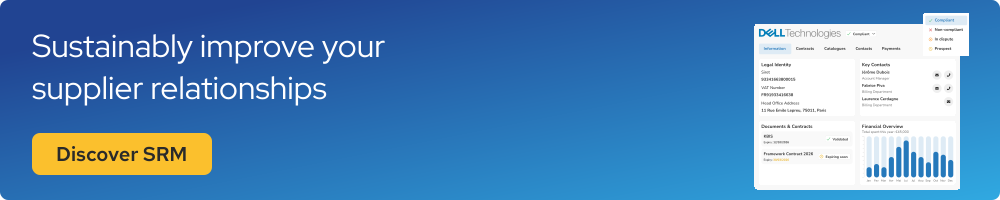
- Integrated Dashboards: Performance data is consolidated into visual dashboards, offering a quick overview and in-depth analysis to identify high-performing suppliers and those needing support.
- Complete History: Every interaction, order, and evaluation is recorded, creating a valuable history for performance reviews and future purchasing decisions.
- Financial Gains and Improved Negotiation:
- Reduced Administrative Costs: Automating repetitive tasks frees up time for procurement and finance teams, allowing them to focus on higher-value activities.
- Optimized Procurement Costs: With better visibility into supplier performance and offerings (via integrated e-sourcing tools), companies are better equipped to negotiate advantageous terms.
- Identifying Best Offers: By easily comparing proposals and performance from multiple suppliers, SRM helps select partners offering the best value for money, generating significant savings.
- Reduced Fraud Risks: Automated verification of supplier information and payment approval workflows secures transactions and prevents fraud.
SRM transforms onboarding into a strategic, secure, and value-generating process, facilitating informed decision-making and strengthening collaboration with essential partners.
Essential Features of a Good SRM
High-performing SRM software is distinguished by a robust set of features, designed to optimize every facet of supplier relationship management, from onboarding to performance monitoring.
- Secure Exchange Portal (Supplier Self-Service):
- An intuitive and customizable interface for suppliers, allowing them to register, manage their information (contact details, banking details, legal documents), submit quotes, invoices, and respond to tenders.
- Secure access and defined user roles to ensure data confidentiality and integrity.
- Personalized dashboards for suppliers, showing them the status of their orders, payments, and performance.
- Digitalized Offer Comparison and Tender Tool (e-Sourcing):
- Complete management of the tender cycle (RFQ/RFP): creation, publication, reception, and analysis of responses.
- Automatic offer comparison features based on predefined criteria (price, quality, deadlines, payment terms, CSR compliance), enabling quick and objective decision-making.
- Negotiation facilitated through reverse auction tools or best offer requests.
- Digital Contract Management and Procurement History:
- Centralization of all contracts and agreements with suppliers, with version tracking, amendments, and specific clauses.
- Automatic alerts on contract expiry dates, allowing for anticipation of renewals or renegotiations.
- Quick access to the complete history of transactions, orders, invoices, and communications for each supplier.
- Supplier Performance Dashboards and Statistics:
- Customizable Key Performance Indicators (KPIs) (on-time delivery, product/service quality, responsiveness, compliance).
- Clear visualization of individual and overall supplier performance through graphs and reports.
- Identification of risks and improvement opportunities based on objective data.
- Risk and Compliance Management:
- Modules for evaluating and classifying supplier risks (financial, operational, CSR, ethical).
- Monitoring document validity (certifications, insurance) and automatic alerts upon expiration.
- Management of audits and corrective actions.
- Integration with Other Systems:
- Ability to interface with ERPs, accounting systems, e-procurement tools, or other existing business applications for unified and seamless management.
When properly leveraged, these features transform SRM into a true nerve center for supplier relationship management, optimizing every step from initial onboarding to long-term strategic collaboration.
To illustrate the added value of SRM, let’s compare traditional onboarding with the software-optimized process:
| Aspect | Traditional Onboarding (Manual) | Optimized Onboarding (with SRM) |
|---|---|---|
| Info Collection | Paper/PDF forms, emails, manual entry. Risk of errors, lost documents, duplicates. | Secure supplier portal (self-service). Structured data, automatic verification, fewer errors. |
| Verification & Compliance | Manual searches, calls, physical files. Long, incomplete process, prone to omissions. | Automated workflows, document expiry alerts, risk and CSR assessment modules. |
| Contracts & Terms | Dispersed documents, manual deadline tracking. Potentially less optimized negotiations. | Centralized contract management, alerts, access to history for better negotiation. |
| Risks | High (fraud, non-compliance, delays, poor quality) due to lack of visibility and control. | Significantly reduced by integrated controls, better traceability, and proactive alerts. |
| Costs & Efficiency | High administrative costs, lost time, potential additional costs due to issues. | Efficiency gains, reduced administrative and procurement costs, resource optimization. |
Weproc: Your Partner for Strategic Supplier Onboarding
At Weproc, we understand that supplier management is central to your company’s performance. That’s why we’ve developed an intuitive and comprehensive SRM solution, designed to transform your supplier onboarding process from an administrative task into a true strategic lever.
Our commitment is to offer you personalized support at every step. Whether you’re a growing SMB or a large enterprise with complex needs, our experts work alongside you to understand your specific challenges and configure the Weproc solution according to your unique processes. We don’t just provide software; we bring business expertise and continuous support to ensure the success of your transition and the optimization of your supplier relationships.
The integrated Weproc solution is more than just a supplier portal. It offers a unified platform that centralizes all interactions with your partners. From the onboarding stage, Weproc allows you to:
- Simplify Information Collection: With a user-friendly supplier portal, your partners can autonomously and securely submit and update their legal, financial, and compliance data. Fewer manual entries for you mean fewer errors and greater reliability.
- Automate Data Verification: Weproc integrates validation mechanisms to ensure information completeness and consistency, thereby reducing fraud and non-compliance risks from the outset.
- Optimize Risk Assessment: Our platform helps you set up risk assessment criteria (financial, CSR, operational) and generate risk scores for each supplier, enabling you to make informed decisions.
- Digitize Contract Management: Centralize all your contracts, track deadlines in real-time, and access a complete history of commitments, ensuring better governance and strategic renegotiations.
- Improve Transparency and Collaboration: A single communication channel and shared dashboards foster fluid collaboration and better mutual understanding between your company and its suppliers.
The benefits of adopting Weproc are numerous: increased efficiency for your procurement and finance teams, a drastic reduction in risks (fraud, non-compliance, disruptions), significant cost optimization through better negotiations, and strengthened supplier relationships, transforming your partners into drivers of innovation and growth.
Don’t let complex supplier onboarding hinder your potential. Weproc offers the clarity, control, and automation needed to build a resilient and high-performing supply chain. We invite you to contact our team today for a personalized demo of our solution or to get assistance tailored to your challenges. Discover how Weproc can simplify, secure, and enhance every new supplier collaboration.
Supplier Onboarding: A Lever for Sustainable Growth
We’ve explored the various facets of supplier onboarding, highlighting its definition, key steps, the inherent risks of poor management, and the transformative impact of SRM solutions. It’s now clear that integrating new business partners is far more than a simple administrative procedure; it’s a fundamental strategic process that directly influences any company’s financial health, operational performance, and long-term reputation.
Successful supplier onboarding is the cornerstone of a robust and resilient supply chain. It minimizes fraud and non-compliance risks, ensures supply quality and continuity, controls costs, and ultimately builds strong, lasting trust relationships with your partners. By investing in a structured and optimized process, companies gain the ability to transform each new supplier into a strategic asset, rather than a potential source of problems.
Adopting structured tools and processes, particularly through Supplier Relationship Management (SRM) software like Weproc, is not only recommended but essential in the current economic climate. These solutions provide the automation, transparency, and intelligence needed to manage the increasing complexity of supplier relationships, freeing procurement and finance teams for higher-value tasks. They enable more effective collaboration, better visibility into supplier performance, and informed decision-making, thereby propelling your company to new heights of competitiveness.
In summary, supplier onboarding is a true lever for sustainable growth. By choosing a proactive, rigorous, and technological approach, your company can fully capitalize on its partnerships, innovate, grow, and gain a competitive edge in its market. Procurement digitalization is a key factor in this success. Don’t wait to optimize this crucial process and transform your supplier relationships into a distinctive competitive advantage.